

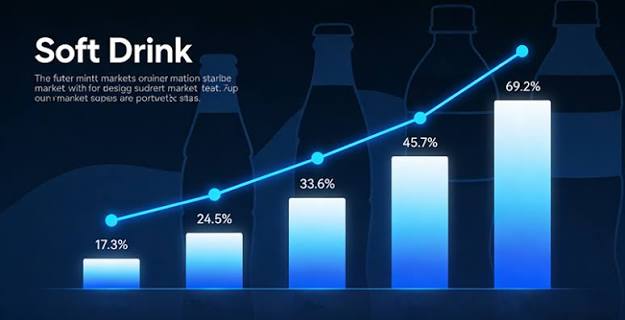
Europe’s soft drink industry is entering a new phase of transformation. While consumer demand for carbonated beverages, juices, bottled water, and functional drinks remains strong, the way products move through the supply chain is changing rapidly. Retailers, wholesalers, importers, and distributors are responding to evolving purchasing behaviors, digital procurement technologies, sustainability expectations, and increasing pressure to improve operational efficiency.
According to the European soft drinks industry association, the sector continues to adapt through innovation in packaging, logistics, product development, and environmental initiatives. At the same time, distributors face growing competition, tighter margins, and higher expectations from retail buyers who demand faster delivery, broader product selections, and reliable inventory availability.
For beverage distributors, understanding these market trends is no longer optional—it has become essential for maintaining competitiveness in an increasingly data-driven industry.
Businesses that recognize where the market is heading can improve procurement strategies, strengthen supplier relationships, optimize logistics, and respond more effectively to changing customer expectations.
This article examines the most significant European soft drink market trends shaping distribution in 2026 and explains how distributors can position themselves for sustainable long-term growth.
Europe’s Soft Drink Market Continues to Evolve
Europe remains one of the world’s most mature beverage markets.
Consumers have access to an extensive range of products, including:
- Carbonated soft drinks
- Fruit beverages
- Energy drinks
- Functional beverages
- Flavored water
- Ready-to-drink teas
- Sports drinks
- Low- and no-sugar alternatives
While traditional soft drinks continue to account for a substantial share of sales, consumer preferences continue shifting toward greater variety, convenience, and product innovation.
For distributors, this expanding product landscape creates both opportunities and operational challenges.
Managing broader product portfolios requires stronger inventory planning, efficient warehouse management, and closer collaboration with suppliers.
At the same time, retailers increasingly expect distributors to deliver multiple brands and package formats within consolidated shipments rather than sourcing products from numerous suppliers.
Trend 1: Premiumization Is Expanding Across Retail Channels
Premiumization continues influencing beverage purchasing throughout Europe.
Consumers increasingly seek products offering distinctive flavors, premium packaging, healthier ingredients, or unique brand positioning.
Although premium beverages often command higher retail prices, they also create opportunities for distributors to diversify product portfolios and improve margins.
Examples include:
- Premium sparkling beverages
- Botanical soft drinks
- Craft sodas
- Functional beverages
- Organic soft drinks
- Imported specialty brands
Retailers increasingly dedicate shelf space to premium products that complement traditional high-volume brands.
Distributors capable of supplying both established international brands and emerging premium beverages are better positioned to meet changing retailer requirements.
Rather than replacing mainstream products, premium beverages are expanding overall category diversity.
Trend 2: Mixed Pallet Distribution Is Becoming Standard Practice
Retail purchasing has become increasingly flexible.
Instead of ordering large quantities of a single beverage, many retailers now prefer mixed pallet shipments containing multiple brands, flavors, or package sizes.
This approach allows businesses to:
- Reduce excess inventory
- Improve product variety
- Test new beverages
- Respond faster to consumer demand
- Maximize warehouse space
Mixed pallet distribution also improves cash flow because retailers avoid committing excessive capital to one product category.
For distributors, offering mixed pallet solutions has become an important competitive advantage.
Businesses capable of efficiently consolidating products across multiple beverage categories often strengthen customer relationships through greater purchasing flexibility.
Trend 3: Supply Chain Reliability Has Become a Competitive Advantage
The last several years demonstrated how quickly global supply chains can experience disruption.
Transportation bottlenecks, manufacturing delays, labor shortages, and changing freight costs highlighted the importance of resilient distribution networks.
Today, retailers increasingly evaluate distributors based on reliability rather than simply pricing.
Key expectations include:
- Consistent inventory availability
- Predictable delivery schedules
- Accurate order fulfillment
- Transparent communication
- Efficient logistics coordination
Distributors that consistently deliver complete orders on time often build stronger long-term relationships with retailers than businesses competing solely on price.
Reliability has become a significant differentiator in European beverage distribution.
Trend 4: Health-Conscious Consumer Preferences Continue to Shape Product Demand
Consumer purchasing decisions increasingly reflect broader health and wellness trends.
Across Europe, demand continues growing for beverages that offer reduced sugar content, natural ingredients, or functional benefits.
Manufacturers have responded by expanding product portfolios to include:
- Sugar-free carbonated drinks
- Low-calorie soft drinks
- Vitamin-enriched beverages
- Functional energy drinks
- Enhanced waters
- Plant-based beverages
For distributors, this trend requires careful inventory planning.
Maintaining balanced product portfolios allows distributors to meet retailer demand while adapting to changing consumer preferences.
Businesses monitoring category performance through sales analytics are better positioned to adjust purchasing strategies as market demand evolves.
Trend 5: Digital Procurement Is Reshaping Wholesale Distribution
Digital transformation continues improving efficiency throughout the beverage supply chain.
Procurement teams increasingly rely on digital platforms for:
- Product quotations
- Purchase orders
- Inventory management
- Shipment tracking
- Invoice processing
- Supplier communication
These technologies reduce manual administrative work while improving purchasing visibility.
Distributors also benefit from greater operational transparency.
Real-time inventory information enables more accurate forecasting, while electronic documentation accelerates procurement workflows and improves communication between suppliers and buyers.
Businesses investing in digital procurement systems are generally better positioned to respond quickly to changing market conditions.
Trend 6: Sustainability Is Becoming a Business Requirement
Sustainability has moved beyond corporate social responsibility and is now influencing purchasing decisions throughout the European beverage industry. Retailers, hospitality groups, and wholesale buyers increasingly evaluate suppliers based not only on product quality and pricing but also on environmental performance and supply chain transparency.
Across Europe, manufacturers and distributors are investing in initiatives that reduce environmental impact while improving operational efficiency.
Examples include:
- Recyclable packaging materials
- Increased use of recycled PET (rPET)
- Lightweight bottle designs
- More efficient transportation planning
- Reduced packaging waste
- Improved warehouse energy efficiency
For distributors, sustainability also creates operational benefits.
Consolidated deliveries reduce vehicle journeys, optimize fuel consumption, and improve freight utilization while lowering transportation costs.
Businesses capable of supporting environmentally responsible distribution practices are increasingly viewed as preferred partners by retailers seeking to strengthen their own sustainability commitments.
Rather than being a regulatory obligation alone, sustainability has become a competitive advantage.
Trend 7: Cross-Border Beverage Distribution Continues to Expand
One of Europe’s greatest commercial advantages remains the accessibility of neighboring markets.
The European Single Market has made cross-border trade significantly more efficient by reducing barriers to the movement of goods between member states. As a result, distributors are no longer limited to domestic markets.
Today, beverage businesses increasingly serve customers across multiple European countries through coordinated logistics networks and centralized procurement strategies.
Cross-border distribution offers several advantages:
- Access to larger customer bases
- Improved purchasing economies of scale
- Broader product availability
- More efficient inventory allocation
- Greater resilience against regional demand fluctuations
For importers and wholesalers, sourcing products through experienced European suppliers also simplifies international procurement by reducing the complexity of coordinating multiple manufacturers.
As logistics infrastructure continues improving across Europe, cross-border beverage distribution is expected to remain a major driver of market growth.
Trend 8: Data-Driven Distribution Is Replacing Traditional Inventory Management
The beverage industry generates significant amounts of operational data every day.
Sales performance, seasonal demand, inventory turnover, delivery schedules, transportation costs, and customer purchasing behavior all provide valuable insights that influence procurement decisions.
Leading distributors increasingly rely on data analytics rather than intuition when making purchasing decisions.
Modern inventory systems allow businesses to monitor:
- Product performance
- Regional demand
- Warehouse capacity
- Delivery performance
- Customer purchasing trends
- Seasonal fluctuations
- Supplier lead times
This information enables distributors to optimize purchasing volumes, reduce unnecessary inventory, and improve overall operational efficiency.
Retailers also benefit from improved product availability because distributors can respond more quickly to changing market conditions.
Data-driven decision-making is becoming one of the defining characteristics of successful beverage distribution businesses.

How Distributors Can Prepare for the Next Five Years
The European beverage market will continue evolving as consumer preferences, technology, logistics, and sustainability initiatives reshape the supply chain.
Distributors seeking long-term success should focus on several strategic priorities.
Diversify Product Portfolios
Retailers increasingly expect distributors to offer a wider range of beverages within a single purchasing relationship.
Expanding product portfolios may include:
- Carbonated soft drinks
- Energy drinks
- Fruit beverages
- Bottled water
- Functional drinks
- Premium soft drinks
- Low- and no-sugar products
Offering greater product variety strengthens customer relationships while reducing dependence on a single product category.
Invest in Digital Procurement
Automation and digital procurement systems improve operational efficiency while reducing administrative costs.
Businesses should prioritize technologies supporting:
- Inventory visibility
- Electronic quotations
- Shipment tracking
- Purchase order management
- Sales forecasting
Digital transformation enables distributors to make faster, more informed purchasing decisions while improving customer service.
Strengthen Supply Chain Partnerships
Long-term supplier relationships continue providing operational advantages beyond competitive pricing.
Reliable suppliers contribute through:
- Consistent inventory availability
- Accurate commercial documentation
- Efficient logistics coordination
- Better communication
- Flexible purchasing options
Businesses sourcing beverages across several European markets often benefit from working with an experienced European wholesale beverage supplier capable of supporting mixed pallet orders, export coordination, and structured B2B procurement. Companies such as Juicy GmbH provide retailers, wholesalers, distributors, and importers with access to internationally recognized beverage brands while supporting efficient cross-border sourcing and long-term supply chain planning through their European beverage supply network.
Rather than simply supplying products, experienced wholesalers help distributors improve procurement efficiency by coordinating inventory planning, logistics, and commercial documentation throughout the purchasing process.
Build Greater Supply Chain Flexibility
Unexpected market changes are inevitable.
Distributors that maintain flexible procurement strategies can respond more effectively to:
- Seasonal demand spikes
- Transportation disruptions
- Product shortages
- Promotional opportunities
- Changing consumer preferences
Flexibility has become one of the most valuable competitive advantages within modern beverage distribution.
Traditional Distribution vs. Modern Distribution
| Business Area | Traditional Distribution | Modern Distribution Strategy |
| Inventory Planning | Reactive | Forecast-driven |
| Procurement | Manual purchasing | Digital procurement platforms |
| Supplier Relationships | Transactional | Long-term strategic partnerships |
| Product Selection | Limited brand range | Broad multi-category portfolio |
| Distribution | Domestic focus | Cross-border European distribution |
| Freight | Multiple small deliveries | Consolidated shipments and mixed pallets |
| Decision Making | Experience-based | Data-driven analytics |
| Sustainability | Secondary consideration | Integrated into procurement strategy |
| Customer Expectations | Product availability | Availability, speed, flexibility, and transparency |
Modern distribution strategies enable businesses to operate more efficiently while meeting the increasingly complex expectations of retailers and commercial buyers.
Why Market Awareness Matters More Than Ever
The European soft drink industry is no longer driven solely by manufacturing capacity or brand recognition. Market success increasingly depends on how effectively distributors interpret trends and adapt their operations.
Businesses that monitor consumer behavior, invest in digital procurement, strengthen supplier relationships, and improve logistics planning are better positioned to respond to changing retail requirements.
Market awareness allows distributors to anticipate demand rather than react to it, creating opportunities to improve service levels, strengthen customer relationships, and operate more efficiently.
Understanding industry trends has therefore become an essential component of long-term business strategy rather than simply an exercise in market research.
Conclusion
The European soft drink market is entering a period of accelerated transformation driven by changing consumer preferences, digital innovation, sustainability initiatives, and increasingly sophisticated supply chains. For distributors, success is no longer determined solely by access to well-known beverage brands. Instead, competitive advantage depends on operational agility, market intelligence, and the ability to respond quickly to evolving retail expectations.
The trends shaping the industry—from premiumization and mixed pallet distribution to digital procurement, sustainability, and cross-border trade—highlight a broader shift toward more efficient and resilient distribution models. Retailers now expect suppliers to deliver not only products but also reliable logistics, transparent communication, flexible ordering options, and consistent inventory availability.
Distributors that invest in modern procurement systems, leverage data-driven decision-making, diversify product portfolios, and establish long-term supplier partnerships will be better positioned to navigate future market changes while strengthening customer relationships.
As Europe’s beverage industry continues to evolve, organizations that remain informed about market developments and proactively adapt their business strategies will be well placed to capitalize on emerging opportunities, improve operational performance, and support sustainable long-term growth.
Frequently Asked Questions
1. What are the biggest trends shaping the European soft drink market?
The European soft drink market is being influenced by premium beverage demand, digital procurement, sustainability initiatives, mixed pallet distribution, healthier product choices, cross-border trade, and data-driven inventory management.
2. Why is mixed pallet distribution becoming more popular?
Mixed pallets allow retailers to purchase multiple brands and product formats within a single shipment. This reduces inventory risk, improves product variety, optimizes warehouse space, and lowers transportation costs through consolidated deliveries.
3. How are digital technologies changing beverage distribution?
Digital procurement platforms improve quotation management, inventory visibility, shipment tracking, supplier communication, and purchasing efficiency. These technologies help distributors make faster, data-driven decisions while reducing administrative work.
4. Why is sustainability important for beverage distributors?
Retailers increasingly prefer suppliers that support environmentally responsible practices. Efficient transportation, recyclable packaging, reduced packaging waste, and transparent supply chains help distributors meet evolving customer expectations while improving operational efficiency.
5. What should distributors consider when selecting wholesale beverage suppliers?
Distributors should evaluate suppliers based on product availability, logistics capability, delivery reliability, inventory support, export experience, commercial documentation, customer service, and long-term partnership potential—not price alone.
6. How does cross-border distribution benefit beverage businesses?
Cross-border distribution provides access to larger customer bases, broader product availability, greater purchasing flexibility, improved economies of scale, and increased resilience against regional demand fluctuations within the European market.
7. Why is market data becoming more valuable for distributors?
Sales analytics, inventory reports, and customer purchasing data allow distributors to forecast demand more accurately, reduce unnecessary inventory, improve stock availability, and optimize procurement decisions.
8. How can distributors remain competitive in the future?
Successful distributors should monitor market trends, invest in digital procurement systems, diversify beverage portfolios, strengthen supplier relationships, improve logistics efficiency, and adopt data-driven decision-making to respond effectively to changing market conditions.
SEO Title
European Soft Drink Market Trends Every Distributor Should Watch in 2026
Permalink
european-soft-drink-market-trends
Meta Description
Explore the key European soft drink market trends shaping distribution in 2026, from digital procurement and sustainability to cross-border trade and premium beverages.
