

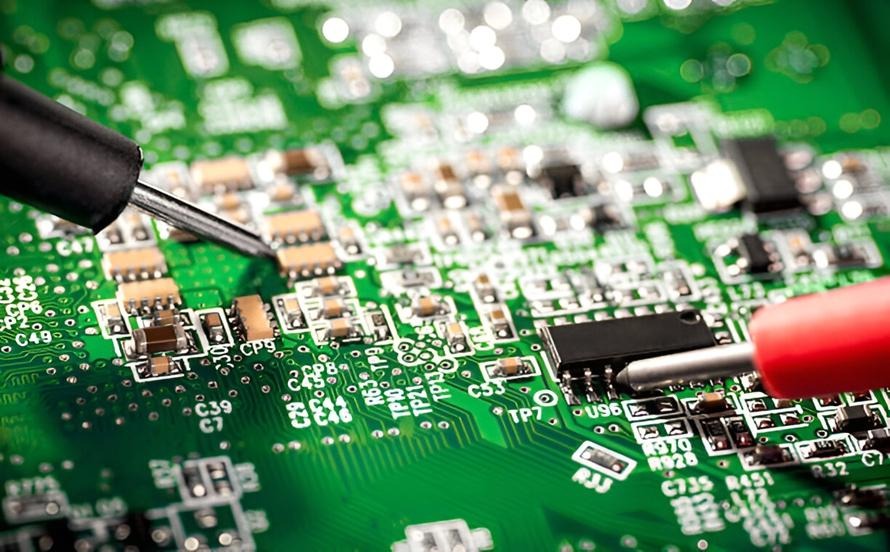
The growing demand for smaller, faster, and more efficient electronic devices has driven continuous innovation in printed circuit board technology. As modern products become increasingly compact while requiring higher operating speeds, engineers must find new ways to improve signal integrity, reduce electrical noise, and optimize power distribution. One technology that has gained significant importance in high-performance electronics is the Capacitive PCB.
A Capacitive PCB is designed to provide embedded capacitance within the circuit board structure, improving electrical performance without relying solely on discrete capacitors mounted on the board. By integrating capacitive properties directly into the PCB, designers can reduce power noise, improve signal quality, save valuable board space, and enhance the reliability of high-speed electronic systems. These advantages make capacitive PCBs particularly valuable in telecommunications, computing, aerospace, medical electronics, industrial automation, and advanced consumer devices.
Because embedded capacitance requires specialized materials, precise layer construction, and advanced manufacturing techniques, producing these circuit boards demands extensive engineering expertise. Choosing an experienced Capacitive PCB manufacturer helps ensure consistent electrical performance, high manufacturing quality, and long-term product reliability.
This article explores what a capacitive PCB is, how it is manufactured, its advantages, applications, and why selecting the right manufacturing partner is essential.
What Is a Capacitive PCB?
A Capacitive PCB is a printed circuit board designed with embedded capacitance that improves power distribution and signal stability throughout the electronic circuit. Instead of relying entirely on surface-mounted capacitors, the PCB itself contributes to electrical capacitance through specially engineered dielectric materials and closely spaced conductive planes.
The embedded capacitance is created by placing thin dielectric layers between copper planes, allowing the board to function as an integrated capacitor. This structure provides localized energy storage that helps stabilize voltage levels during high-speed switching operations.
Unlike traditional PCB designs where numerous discrete capacitors occupy valuable board space, capacitive PCBs distribute capacitance across the entire board. This approach improves electrical performance while simplifying component placement and enabling more compact circuit layouts.
Capacitive PCB technology is particularly beneficial for high-speed digital circuits, advanced processors, networking equipment, and other applications requiring exceptional signal integrity.
Why Capacitive PCBs Are Important
As processor speeds continue increasing, maintaining stable power delivery has become one of the greatest challenges in PCB design. Rapid switching of integrated circuits generates voltage fluctuations that can introduce electrical noise, signal distortion, and reduced system reliability.
A Capacitive PCB helps minimize these issues by providing distributed embedded capacitance close to high-speed components. This improves power integrity by reducing voltage ripple and supplying localized energy during rapid current changes.
Signal integrity also benefits because embedded capacitance reduces electromagnetic interference and supports cleaner high-speed signal transmission. This becomes especially important in systems operating at high frequencies where even minor electrical disturbances can affect performance.
Another advantage is improved board utilization. Since fewer discrete capacitors are required, engineers gain additional space for routing complex circuits or incorporating more electronic components within compact products.
These characteristics make capacitive PCBs an increasingly attractive solution for advanced electronic designs.
The Capacitive PCB Manufacturing Process
Manufacturing a Capacitive PCB requires specialized materials and highly controlled fabrication processes. Production begins with a comprehensive Design for Manufacturability (DFM) review to verify layer stack-up, dielectric thickness, copper plane configuration, impedance requirements, and overall electrical performance.
The fabrication process starts by preparing copper-clad laminate materials with ultra-thin dielectric layers specifically designed to provide embedded capacitance. Circuit patterns are transferred onto copper surfaces using precision photolithography before chemical etching forms the required electrical traces.
For multilayer capacitive PCBs, individual layers are carefully aligned and laminated together under controlled pressure and temperature. Maintaining precise dielectric thickness during lamination is critical because capacitance values depend directly on the spacing between conductive planes.
Precision drilling creates vias for interlayer electrical connections, followed by copper plating that establishes reliable conductive pathways throughout the PCB. After solder mask application, silkscreen printing, and surface finishing, every completed board undergoes detailed inspection and electrical testing.
Strict manufacturing control ensures consistent capacitance, dimensional accuracy, and long-term electrical reliability.
Advantages of Capacitive PCB Technology
One of the greatest advantages of a Capacitive PCB is improved power integrity. Embedded capacitance provides localized energy storage that stabilizes voltage levels and reduces electrical noise during high-speed circuit operation.
Signal integrity also improves because cleaner power distribution minimizes electromagnetic interference and reduces signal distortion. These characteristics support reliable communication between processors, memory devices, and high-speed interfaces.
Capacitive PCBs contribute to miniaturization by reducing the number of discrete capacitors required on the circuit board. This creates additional routing space while simplifying PCB assembly and improving overall system integration.
Thermal performance can also benefit from optimized layer construction that distributes heat more evenly across the board.
Another important advantage is enhanced reliability. Fewer discrete components reduce the number of solder joints and potential failure points, contributing to longer product life and improved operational stability.
These benefits make capacitive PCB technology well suited for advanced electronic systems requiring high performance and compact designs.
Applications of Capacitive PCBs
Capacitive PCBs are widely used in applications where power integrity and signal quality are critical. High-performance computing systems incorporate these circuit boards in processors, graphics hardware, servers, and data center equipment operating at extremely high processing speeds.
Telecommunications equipment uses capacitive PCBs in networking hardware, communication switches, routers, and 5G infrastructure where stable signal transmission is essential.
Medical electronics rely on embedded capacitance technology in diagnostic imaging systems, laboratory instruments, patient monitoring equipment, and portable healthcare devices that require reliable electronic performance.
Aerospace and defense applications utilize capacitive PCBs in radar systems, satellite communication equipment, avionics, and navigation electronics where electrical stability directly affects operational reliability.
Industrial automation systems, artificial intelligence hardware, automotive electronics, scientific instruments, and advanced consumer electronics also benefit from the improved electrical performance provided by capacitive PCB technology.
Why Choosing an Experienced Capacitive PCB Manufacturer Matters
Producing capacitive circuit boards requires specialized engineering expertise that extends beyond conventional PCB manufacturing. An experienced Capacitive PCB manufacturer understands how material selection, dielectric properties, layer construction, and manufacturing precision influence embedded capacitance and overall electrical performance.
Professional manufacturers collaborate with customers during product development by reviewing stack-up configurations, impedance requirements, thermal considerations, and fabrication tolerances before production begins.
Advanced manufacturing facilities equipped with laser direct imaging, automated optical inspection, precision drilling systems, impedance testing equipment, and intelligent process control ensure consistent quality throughout both prototype and production manufacturing.
Experienced manufacturers also maintain strict process monitoring to ensure dielectric thickness, copper plane spacing, and lamination accuracy remain within specified tolerances, enabling reliable capacitance values across every PCB.
Working with an experienced manufacturer reduces production risks while improving electrical performance and manufacturing efficiency.
Quality Assurance in Capacitive PCB Manufacturing
Quality assurance is essential because embedded capacitance depends on extremely precise manufacturing tolerances. Manufacturers inspect incoming materials before carefully monitoring every stage of production to ensure dimensional consistency and electrical accuracy.
Automated Optical Inspection identifies fabrication defects including open circuits, short circuits, incorrect trace dimensions, and copper irregularities before assembly. X-ray inspection verifies multilayer alignment and internal structures that cannot be inspected visually.
Electrical testing confirms continuity, insulation resistance, impedance characteristics, and embedded capacitance performance before shipment. Additional reliability evaluations often include thermal cycling, solderability testing, environmental testing, and dimensional verification to ensure dependable long-term operation.
Leading manufacturers maintain internationally recognized certifications such as ISO 9001, IPC standards, UL certification, IATF 16949 for automotive electronics, ISO 13485 for medical devices, and RoHS compliance. These certifications demonstrate their commitment to producing high-quality capacitive PCBs for demanding electronic applications.
Conclusion
The Capacitive PCB represents an advanced solution for improving power integrity, signal quality, and circuit miniaturization in modern electronic systems. By integrating capacitance directly into the PCB structure, designers can reduce electrical noise, enhance system reliability, and optimize board space for increasingly complex applications.
Choosing an experienced Capacitive PCB manufacturer ensures access to advanced engineering expertise, precision manufacturing technologies, and rigorous quality assurance processes. As high-speed electronics continue to evolve across industries such as telecommunications, computing, automotive, aerospace, healthcare, and industrial automation, capacitive PCB technology will remain an important foundation for developing reliable and high-performance electronic products.
