

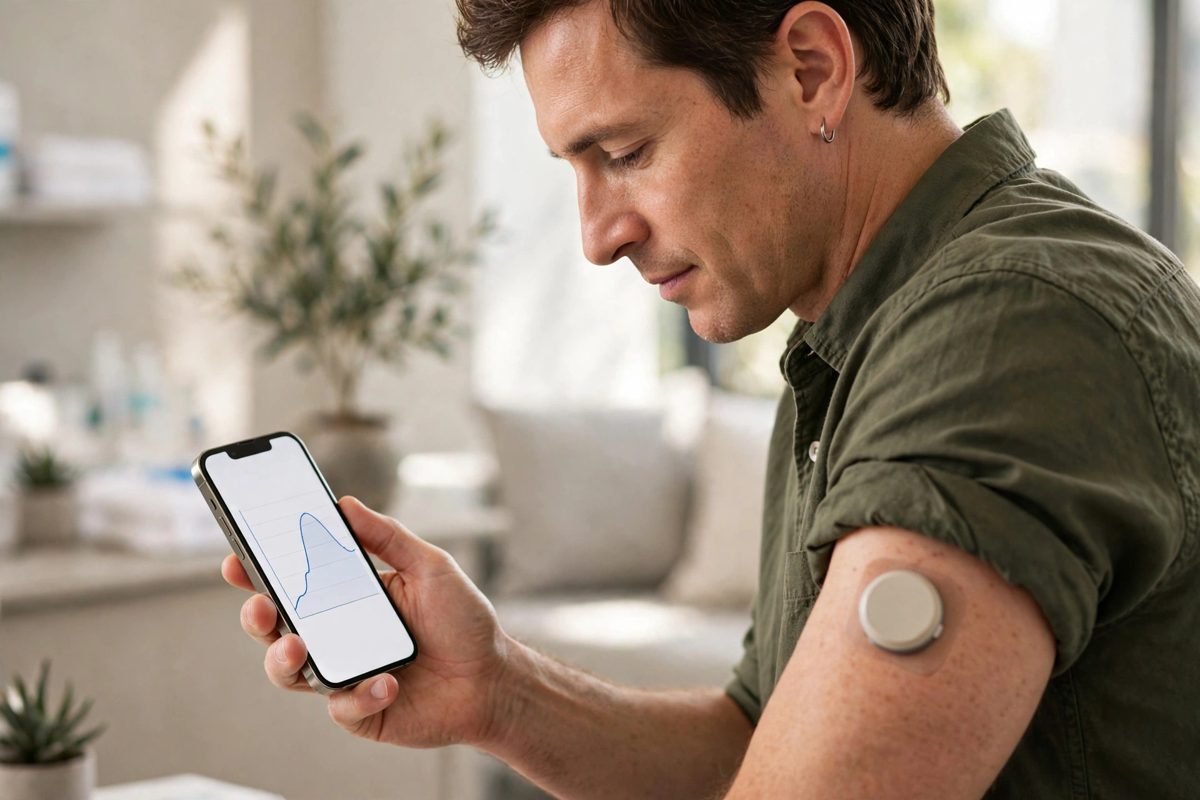
Continuous glucose monitors have changed daily life for many people with type 1 diabetes, but their role in type 2 diabetes — especially for people who do not use insulin — has been far less certain. A major clinical trial published in the New England Journal of Medicine now provides some of the strongest evidence yet that the devices can help this much larger group of patients keep their blood sugar in a healthy range.
According to the trial, adults with type 2 diabetes who used a continuous glucose monitor spent approximately five more hours each day in their target blood sugar range than those who did not. For a condition managed through thousands of small daily decisions, researchers say that difference is clinically meaningful.
What the Trial Found
The study is described as the largest clinical trial of its kind, focusing on adults with type 2 diabetes who do not use insulin — a group that has often been excluded from coverage and research for glucose monitoring technology. Participants using the monitors could see their glucose levels in real time, along with trends showing whether levels were rising or falling.
That visibility appears to change behaviour. Instead of relying only on occasional finger-prick tests or quarterly laboratory results, participants could see how a meal, a walk or a medication affected their glucose within minutes. Over time, those feedback loops helped them spend substantially more of the day within the target range associated with lower risks of complications.
Details of the research were also summarised by the University of Colorado Anschutz Medical Campus, which highlighted the roughly five additional hours per day in range achieved by monitor users.
Why Five Extra Hours Matters
Doctors increasingly use “time in range” as a measure of diabetes control because it captures the pattern of a whole day, not just an average. Two patients can share the same average glucose while experiencing very different daily swings, and the patient who stays in range longer generally faces lower risk of damage to the eyes, kidneys, nerves and cardiovascular system over time.
Five additional hours a day compounds quickly — the equivalent of more than two extra months per year spent in the target zone. Researchers caution that the trial measured glucose control rather than long-term complications directly, but improved time in range is widely regarded as a strong step in the right direction.
For patients, the benefit can also be psychological. Clear feedback replaces guesswork, and small improvements become visible immediately, which can make diet and activity changes feel worthwhile rather than abstract.
Who Could Benefit Most
The findings are most relevant to the large share of people with type 2 diabetes who manage their condition with oral medications, lifestyle changes, or both. Until now, many of them have had little access to continuous monitoring, partly because insurers and health systems questioned whether the devices were cost-effective for people not using insulin.
Evidence from a large, well-designed trial strengthens the case for wider access, particularly for patients whose laboratory results remain above target despite standard care. As with any monitoring tool, context matters: discussing results with a clinician, much like asking the right questions before choosing a hospital for surgery, helps patients turn information into a safe treatment plan.
Access and Cost Remain the Hurdles
Technology alone does not close the gap. Sensors must be replaced regularly, supplies can be expensive without coverage, and the stream of data can overwhelm patients who receive little guidance on interpreting it. Clinicians, too, need time and systems to review the information patients generate.
There is also an equity question. If monitors mainly reach patients who already have good access to care, the benefits could widen existing disparities in diabetes outcomes. Health systems considering wider use will need training, follow-up support and clear criteria for who benefits most — similar to the medication and treatment planning issues explored in our article on what therapists need to know about medications and treatment plans.
The Bottom Line
This trial does not suggest that every person with type 2 diabetes needs a continuous glucose monitor. It does, however, challenge the assumption that the technology only helps people who use insulin. For adults struggling to stay in range on other treatments, real-time glucose data appears to be a powerful tool for understanding — and changing — daily patterns.
The next questions are practical: which patients should be offered monitors first, how long they should use them, and who should pay. With evidence this strong, those conversations between patients, doctors and insurers are likely to move much faster.
