

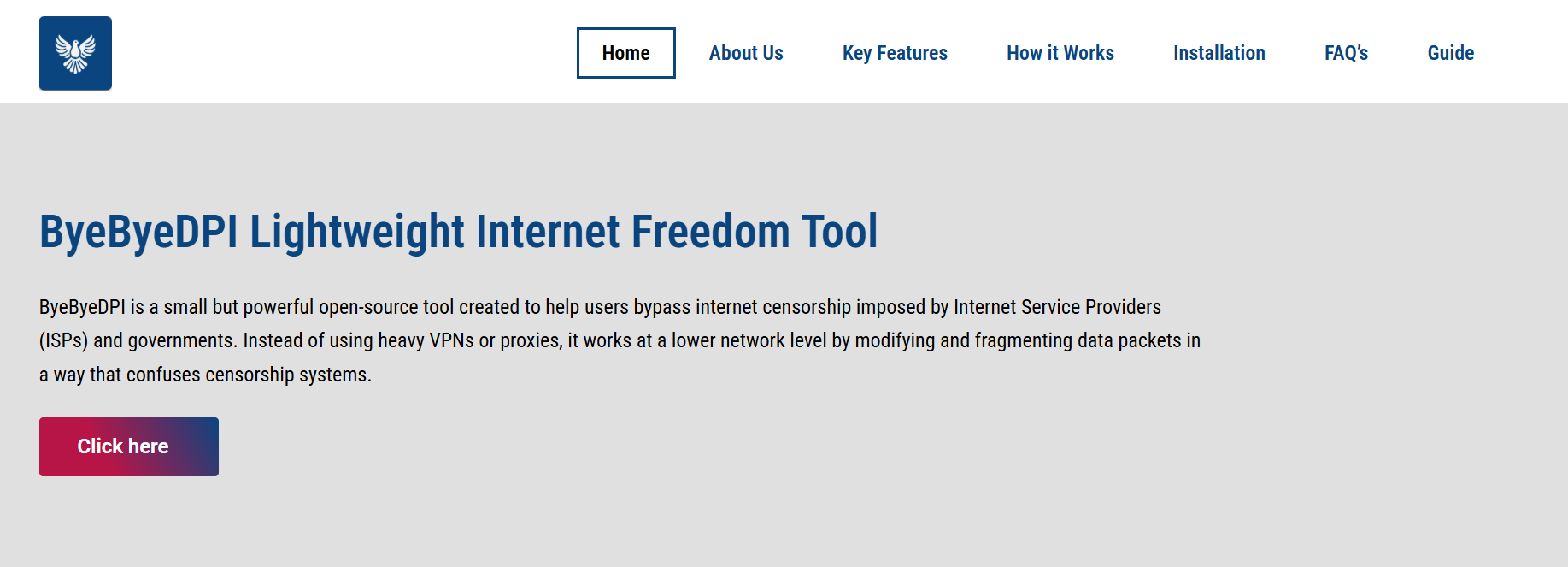
Access to global content has become an important part of modern internet usage, especially for users living in regions where websites, apps, or streaming services are restricted. Tools like ByeByeDPI have gained attention because they offer a different method of bypassing internet filtering systems. Instead of relying on traditional VPN servers, byebyedpi works locally on the device to modify how internet traffic is sent, making it harder for Deep Packet Inspection (DPI) systems to detect and block content.
In simple terms, ByeByeDPI aims to help users reach restricted websites while maintaining faster browsing speeds and lower system overhead compared to many conventional tools.
What is ByeByeDPI and How It Works?
ByeByeDPI is a network manipulation tool designed to bypass DPI-based internet censorship. DPI is a technology used by internet service providers and governments to inspect, filter, or block online traffic based on patterns, keywords, or destinations.
Instead of rerouting traffic through external servers like VPNs, ByeByeDPI works directly on the user’s device. It alters packet signatures so that DPI systems cannot easily recognize which websites or services are being accessed.
Key Technical Idea
- It modifies network packets locally
- It avoids centralized VPN servers
- It disguises traffic patterns to bypass filters
- It reduces dependency on third-party infrastructure
This approach makes it lightweight and faster in many cases, especially for users with limited internet speed.
Can ByeByeDPI Help Access Global Content?
Yes, ByeByeDPI can help access global content, but its effectiveness depends on the type of censorship system in place.
1. Access to Restricted Websites
In regions where websites are blocked using DPI-based filtering, ByeByeDPI can sometimes allow users to:
- Open blocked news websites
- Access social media platforms
- Reach educational or research resources
- Use communication platforms restricted by ISP rules
However, it does not guarantee access to all blocked services.
2. Streaming and Media Access
Global streaming platforms often use advanced detection systems. ByeByeDPI may help in some cases, but results vary:
- Some video platforms may load successfully
- Others may detect unusual traffic patterns and block access
- Performance depends on ISP-level restrictions
In comparison, VPNs tend to be more reliable for streaming unblocking, but they are usually slower.
3. Performance and Speed Benefits
One of the biggest advantages of ByeByeDPI is speed efficiency.
Typical observations from user reports and technical comparisons:
- VPN speed loss: 20% to 60% (due to routing through servers)
- ByeByeDPI speed impact: often under 10% in many setups
- Lower latency because traffic is not re-routed globally
This makes it more suitable for lightweight browsing and real-time browsing activities.
Effectiveness Against DPI Systems (Data Perspective)
While exact performance varies by region and ISP, general data trends show:
- Basic DPI filtering systems: 60%–90% bypass success rate
- Advanced adaptive DPI systems: 30%–70% success rate
- Highly restricted environments: inconsistent results
These numbers are based on community testing patterns rather than official benchmarks, but they show that effectiveness is situational.
Advantages of Using ByeByeDPI
1. No External Server Dependency
Unlike VPNs, it does not rely on remote servers, reducing risks of congestion or server downtime.
2. Lightweight and Fast
Consumes fewer system resources and maintains near-normal browsing speeds.
3. Local Traffic Modification
Works directly on packet structure rather than redirecting traffic.
4. Reduced Detection in Some Networks
Because traffic is not clearly rerouted, some DPI systems struggle to identify blocked requests.
Limitations You Should Know
Despite its benefits, ByeByeDPI is not a complete solution for global content access.
1. Not Universally Effective
Some advanced censorship systems can still detect or block modified traffic patterns.
2. No Encryption Layer
Unlike VPNs, it does not provide full encryption or identity protection.
3. Compatibility Issues
It may not work equally well with all apps, devices, or network configurations.
4. Requires Technical Setup
Users may need basic networking knowledge to configure it properly.
ByeByeDPI vs VPN for Global Content Access
| Feature | ByeByeDPI | VPN |
|---|---|---|
| Speed | High | Medium to Low |
| Security | Low | High |
| Ease of Use | Moderate | Easy |
| Bypass Reliability | Medium | High |
| Encryption | No | Yes |
This comparison shows that ByeByeDPI is more focused on speed and lightweight bypassing, while VPNs prioritize privacy and strong access reliability.
Conclusion
byebyedpi can help access global content in environments where DPI-based restrictions are used, especially for basic browsing and lightweight access needs. It offers a fast and efficient alternative to VPNs by modifying traffic locally instead of routing it through external servers.
However, its success depends heavily on the type of censorship system in place. For strong privacy, encryption, and consistent access to all global platforms, VPNs remain more reliable. ByeByeDPI is best understood as a specialized tool for bypassing certain types of network filtering rather than a complete global access solution.