

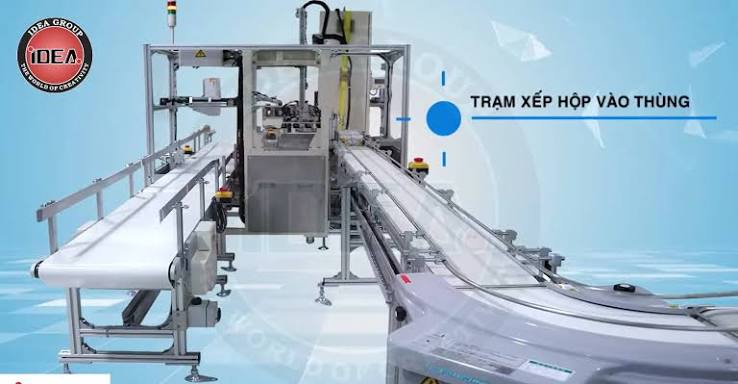
Key Takeaways
Automated packaging lines can dramatically lower cycle time. This boost in efficiency increases production output, allowing businesses to get products to market faster than usual.
Precision technology plays a vital role in automation, enhancing product consistency. This diminishes human error and upholds brand integrity by ensuring identical quality and presentation for every item.
Transitioning to automation changes workforce roles significantly. Employees find themselves focusing more on strategic oversight tasks—like quality control and process optimization—rather than performing repetitive, manual tasks.
With automation, employee safety sees marked improvements. Hazardous tasks are taken over by machines, cutting down on workplace accidents and enhancing overall morale.
Moreover, the scalability of automated systems enables businesses to adapt quickly to shifts in market demand. They can launch new products and manage production fluctuations seamlessly, without needing extensive machinery changes.
Furthermore, integrating various packaging formats into automated systems reduces changeover times. This flexibility helps businesses efficiently meet diverse consumer preferences.
To successfully transition to automated solutions, comprehensive planning and training are necessary. This ensures employees are well-prepared to operate new systems effectively, ultimately contributing to operational success.
Maximizing Production Output: Unique Advantages of Automated Packaging Lines
Streamlining Processes to Reduce Cycle Time
Achieving operational excellence hinges on effectively cutting down cycle time. Automated packaging lines are pivotal for businesses striving to maximize production output. With high-speed machinery and smart systems in place, many companies experience a notable uptick in throughput, reducing delays and enhancing process flow.
Experts often highlight cycle time reduction as a primary advantage of automation. When machines run at peak speed without interruptions, productivity tends to soar. Businesses quickly learn that delivering products to market sooner provides a valuable competitive edge. Consider this: every saved minute per cycle means more products packed each hour, which inevitably drives revenue up.
- High-speed packing machinery helps eliminate bottlenecks.
- Real-time monitoring can boost overall efficiency.
- Synchronization with other production lines guarantees seamless transitions.
Moreover, cutting cycle times can significantly lower operational costs. Efficient and consistent machinery operations lead to reduced energy consumption. Importantly, with fewer resources expended per unit, businesses find their profit margins improving. In such a fast-paced industry, clients seek lean solutions that promise sustainable output without compromising quality. Automation fulfills this requirement exceptionally well.
Raising Product Consistency with Precision Technology
Maintaining product consistency is not just advantageous; it’s crucial for sustaining brand integrity. Automated systems are engineered for precision, guaranteeing that every product meets identical quality and presentation standards. It’s here that packaging line automation stands out. Consistent packaging profoundly affects customer satisfaction and loyalty, ensuring a dependable experience with each purchase.
By removing human error, automation minimizes variations in product handling and packing. With technology in control, occurrences of misalignment, uneven seals, and label inaccuracies become infrequent. This goes beyond mere aesthetics; consistency influences both product safety and compliance with industry standards.
“Automated systems promise a zero-error margin that manual processes simply can’t match.”
The benefits of precision technology include:
- Uniform product dimensions and weights.
- Reliable labeling and barcode scanning.
- Fewer returns due to packaging issues.
Additionally, these systems constantly collect data, making iterative improvements possible. Real-time analytics deliver insights that help fine-tune processes, ensuring clients continue to reap the benefits of enhanced efficiency.
Transforming Labor Dynamics: How Automation Redefines Workforce Roles
Shifting from Manual Work to Strategic Oversight
As automation handles routine tasks, the roles within the workforce undergo a significant transformation. Employees find liberation from repetitive labor and are instead positioned to concentrate on higher-value activities. This shift is less about job displacement and more about enhancing the human component within production.
Current trends reveal that businesses gain more from having workers in strategic roles. Employees can dedicate their efforts to quality control, equipment maintenance, and process optimization—activities crucial for ongoing growth. With automation taking care of heavy lifting, organizations often discover a more skilled and adaptable workforce at their fingertips.
- Increased attention to fault diagnostics and troubleshooting becomes common.
- Customer service inquiries and support improve significantly.
- Roles in research and development enhance the continuous innovation process.
Embracing this shift fosters a more motivated workforce. Workers evolve into partners in innovation, rather than simply cogs in a machine. It’s about merging human skills with technology for a combined effect that bolsters productivity.
Enhancing Employee Safety Through Automation
Workplace safety remains a top priority. Automated packaging lines greatly enhance employee safety by taking over hazardous tasks that could lead to accidents or injuries. Industries that deal with heavy lifting or operate dangerous machinery find freedom in automation, allowing personnel to concentrate on safer responsibilities.
These automated systems come equipped with safety features designed to shield workers from harm. Emergency shut-off controls and protective barriers are just some of the elements in place to prevent accidents, fostering a safe work environment that improves morale and employee retention. Ensuring safety not only boosts productivity but also helps reduce insurance costs and liabilities.
- Ergonomic risks associated with manual handling are eliminated.
- Exposure to hazardous materials is minimized.
- Streamlined operations help maintain order in the work environment.
Investing in automation cultivates a strong culture of safety. Professionals believe that a secure workforce correlates with higher productivity. Companies known for stringent safety measures tend to attract top talent, consequently enhancing overall business performance.
Scalability in Action: Adapting Automated Solutions for Varied Production Needs
Responding to Market Demands with Flexible Automation
In today’s rapidly changing market, adaptability reigns supreme. Automated packaging lines provide unparalleled scalability, enabling businesses to react swiftly to varying demands. Whether there’s a need to ramp up production or scale it back, automated systems adjust smoothly without the cumbersome overhauls characteristic of traditional setups.
This flexibility allows clients to navigate market changes with confidence. Whether launching a new product or managing seasonal spikes in demand, these systems mitigate risks associated with overproduction or stock shortages. Essentially, they create a mechanism that bends and shifts without breaking.
“Flexibility in automation means businesses can pivot strategies without missing a beat.”
Key characteristics of scalable automated systems include:
- Modular machinery that simplifies upgrades.
- Data-driven insights to accurately forecast production needs.
- Inter-connectivity with supply chain management systems.
This level of scalability addresses the need for custom packaging formats—especially critical in saturated markets. Clients can diversify product sizes and packaging styles without making hefty investments in new machinery. Why opt for rigidity when adaptability can drive growth?
Integrating Different Packaging Formats for Efficient Operations
Complexity is common in the packaging industry. However, with automation, integrating multiple packaging formats becomes a streamlined experience. Automated packaging lines adeptly handle various formats—boxes, pouches, wraps, and cases—while minimizing the cumbersome changeover times that manual methods usually entail.
This kind of flexibility allows businesses to satisfy an array of consumer preferences. The scalability inherent in automated solutions permits production to shift focus without compromising output quality or speed. This is more than just smart; in a consumer-driven marketplace, it’s a necessity.
- Support for various product dimensions is included.
- Efficiency improves in transitioning between different packaging styles.
- Costs decrease through the elimination of duplicated processes.
Furthermore, solutions can be enhanced with machine learning and AI to predict which formats will be in demand in the future, setting the foundation for long-term business success.
Key Considerations for Implementing Automated Carton Packing Solutions
Evaluating Technology: Finding the Right Fit for Your Facility
Choosing the right technology isn’t a simple task. Professionals suggest conducting a thorough evaluation of current operational needs prior to committing to any automated carton packing solution. This understanding is vital in driving decision-making, ensuring investments yield real returns.
Assessing production volume, product types, and facility layout is essential. A tailored approach allows for better functionality, as off-the-shelf solutions may not meet specific demands. Performing a needs analysis can help businesses establish the ideal machinery specifications for seamless integration.
- Consider end-of-line requirements and workflow dynamics.
- Engage with suppliers regarding system compatibility.
- Evaluate the availability of support and maintenance services.
In the end, a well-researched approach ensures an investment that aligns with company objectives, ultimately maximizing efficiency and productivity over time.
Planning for Successful Transition and Training
After selecting the technology, the next phase involves a comprehensive transition plan. Training becomes crucial for implementing packaging line automation. Employees must grasp the operation of new systems, helping them feel comfortable and confident. A well-structured transition creates a solid foundation for boosted productivity and morale.
Establishing professional development programs to upskill existing employees is essential. Continuous training keeps staff engaged in the automation journey, involving them actively in the pursuit of operational success.
- Design training sessions that cover all facets of the system’s functionalities.
- Foster feedback loops to identify real-time pain points.
- Incorporate hands-on experiences to reinforce learning effectively.
A strategic training plan reduces risks linked to implementation while cultivating a culture of innovation. It’s all about securing the operation’s future while boosting workforce capabilities.
The journey toward adopting automated packaging solutions stands as an exciting opportunity for businesses aiming to improve efficiency. With a focus on precision and safety, companies can tap into a realm of possibilities. As market demands evolve, so can their methods, paving the way for consistent growth and enduring success.
FAQ
What types of businesses benefit most from automated packaging lines?
Manufacturers within the food and beverage, pharmaceuticals, and consumer goods sectors find automated packaging lines particularly advantageous. The high-volume production needs coupled with consistent quality demands make these industries prime candidates for automation, enhancing operational efficiency and minimizing errors.
How does automation improve sustainability in packaging?
Automation often leads to decreased material waste by refining packaging processes, ensuring precise use of resources. Additionally, energy-efficient machinery lowers overall energy consumption, aligning production practices with sustainability objectives—a factor of increasing importance for both consumers and businesses.
What steps can be taken to ensure successful implementation of automation?
Starting with a detailed needs analysis to evaluate operational requirements is key. Following this, involving employees in training programs ensures they feel confident with the new systems. Establishing feedback loops for ongoing improvement supports smooth integration and operational success.
Can automated systems adapt to new product designs?
Absolutely. Many modern automated systems are designed for flexibility, allowing for swift adjustments to accommodate varying product designs. This versatility is crucial in today’s fast-moving market, helping businesses respond to changing consumer preferences without significant downtime.
What role does data analytics play in automated packaging?
Data analytics plays a pivotal role in refining automation processes. Real-time data collection enables ongoing performance assessments, equipping businesses to make informed decisions that optimize packaging efficiency and enhance production outcomes.
How can automation impact customer satisfaction?
Improved product consistency and quality ensures customers receive reliable products every single time. Faster delivery through efficient packaging processes means that consumers get what they want when they want it. This directly enhances overall satisfaction and loyalty.
What kind of maintenance do automated packaging lines require?
Regular maintenance is crucial to maintain optimal performance levels. Scheduled inspections, cleaning routines, and timely part replacements keep machinery operating smoothly. Many organizations discover that investing in predictive maintenance technology can help identify issues before they result in costly downtimes.
How does automation affect job roles in packaging facilities?
While automation may alter job landscapes, the primary effect is a shift from manual tasks toward strategic oversight. Employees can dedicate their attention to quality control, process optimization, and innovative initiatives, which not only boosts productivity but also increases job satisfaction by allowing them to apply their skills meaningfully.
