

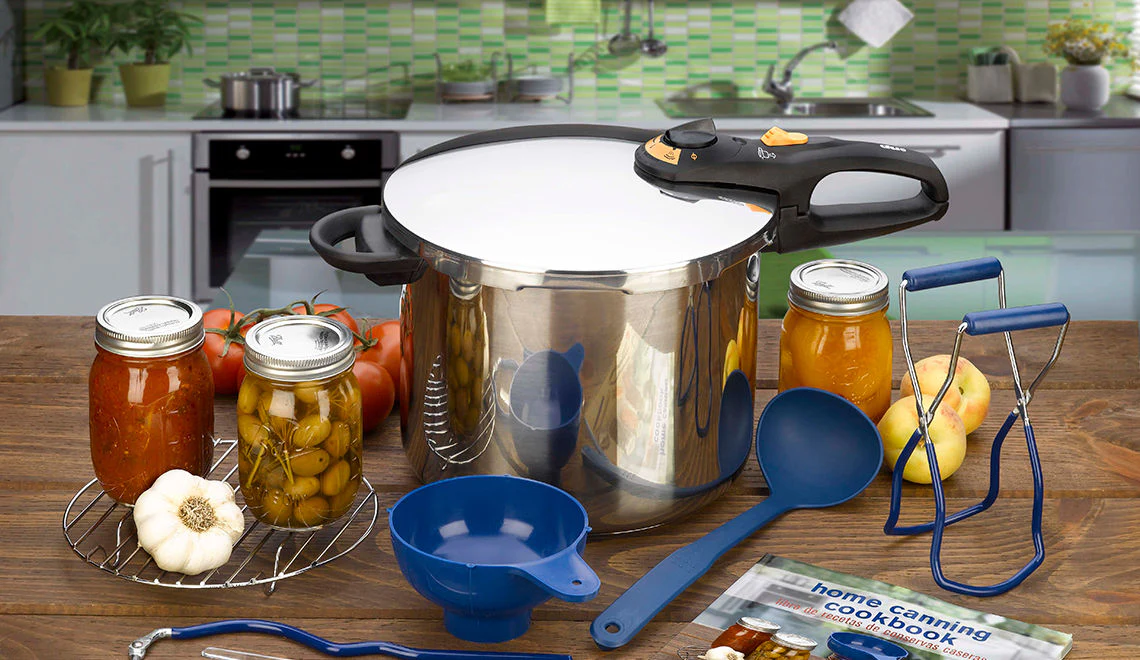
Most people have one, but don’t really understand it. It just sits in the cabinet, gets pulled out occasionally, and somehow manages to turn a rock-hard chunk of beef into a fall-apart tender masterpiece in under an hour. While the pressure cooker gets the accolades, the science behind it is rarely discussed, but it’s actually pretty interesting, and understanding the science behind it will make you better at using it.
What’s Actually Happening Inside That Sealed Pot
Normal cooking has an absolute maximum, and that’s the case with boiling water, because no matter what heat you’re using, boiling water is only going to be 212 degrees, period. If you’re using high heat, medium heat, or whatever, as soon as the water boils, the heat doesn’t actually make the boiling point any hotter, only the amount of steam produced. Your food is cooked at 212 degrees, whether you want it that way or not.
The pressure cooker has an answer to this problem, but it is surprisingly simple: just close the lid, and the steam has no place to go. It will build pressure in the pot, but the boiling point of the water will, too, as the pressure increases. At about 15 psi, which is what most pressure cookers are set to, the water will not boil until it gets to about 250°F, which is about 40 degrees Fahrenheit hotter than the water in the other pot can get, and the difference will be noticeable in the speed at which the food cooks.
The Speed Thing Is Real, And Here’s Why
The speed claim is an advertising gimmick, right? It’s not. At 250°F, food cooks at a molecular level. It’s not just hotter; it’s hotter with more efficient transfer of energy to food. It’s like the difference between boiling water and steaming water under pressure. Proteins start to break down sooner, starches gelatinise sooner, and tough cell walls have no chance of hanging in for nearly as long.
There are no cold spots either. Steam fills the entire sealed space and works on the food evenly from all sides. That matters more than people realise. Cooking time reductions of up to 70% are common with a good pressure cooker, and that’s not an exaggeration. Chickpeas that normally take 90 minutes go in around 25. A dense pork shoulder that would spend four hours in the oven is ready in just under one. For weeknight cooking, that kind of time savings is genuinely life-changing.
Why It Tastes Better Too, Not Just Faster
The pressurised environment doesn’t just heat the food. It physically drives liquid and flavor compounds into the food’s cellular structure. Your broth, your garlic, your herbs and spices, they’re not just surrounding the food. They’re being pushed into it under pressure. The flavor penetration is deeper than what slow simmering achieves in twice the time.
On top of that, a sealed pot holds onto everything. In any open pot on your stove, aromatic compounds evaporate continuously. The smell filling your kitchen while you cook? That’s flavor leaving your food. Inside a pressure cooker, none of that escapes. Every bit of complexity you built into the dish stays in the dish.
What It Does To Tough Meat
Cheap cuts have a reputation for being difficult, and that reputation is earned. The collagen running through brisket, short ribs, and chuck roast needs real heat and real time to convert into gelatin. That gelatin is what creates the rich, silky texture people associate with good braised meat. Normally, you’re looking at a three to four hour window to get there.
A pressure cooker compresses that timeline without cutting corners on the result. The higher temperature accelerates collagen breakdown directly, so you’re getting genuine tenderness, not just softness from moisture. The gelatin still forms. The connective tissue still melts. It just happens in about 45 minutes instead of half a day.
Nutrients and Safety, Addressed Honestly
Cooking times are indeed shorter, and this does help retain nutrients. B vitamins and vitamin C are water-soluble and will degrade with time and heat. The pressure cooker limits both. Plus, with all the liquid sealed inside the cooker, there is no place for the nutrients to leak away to.
Another factor to bring up is the safety of pressure cookers. These newer models are a whole different world compared to what your grandparents were worried about. With redundant release valves, pressure cutouts, and lids that won’t unlock until the pressure is down, pressure cookers are designed with redundant safety features.
Conclusion
The reason why the pressure cooker works is that it breaks one of the rules that every other form of cooking has to live with. The rule is that increased pressure means increased temperature. The rule is that increased temperature means increased rate and quality of flavour penetration. It is not a complicated concept, really. It is just a simple application of common sense and physics, and your meals are all the better for it.