

There is a specific kind of satisfaction that comes from watching a thick, marshmallow-like layer of soap blanket a dirty car. If you’ve ever visited a professional detailing shop, you’ve likely seen this “snow foam” effect in action. It isn’t just for show; it is a critical step in maintaining a swirl-free finish on your vehicle’s paint.
Achieving that professional-grade lather at home requires more than just a bucket and a hose. To get the best results, you need a high-quality foam cannon for pressure washer setups, which allows you to aerate your car wash soap into a clingy foam that dwells on the surface and breaks down grit safely.
As someone who has spent over fifteen years testing detailing gear and writing for the automotive industry, I can tell you that the difference between a “watery mess” and “thick foam” comes down to technique and equipment calibration. In this guide, I’ll walk you through exactly how to master the art of the foam cannon.
Why Use a Foam Cannon?
Before we dive into the “how,” we need to understand the “why.” Most scratches and “spider web” swirl marks on a car’s clear coat are caused by poor washing techniques. When you take a wash mitt and scrub a dry, dusty car, you are essentially grinding dirt into the paint.
A foam cannon provides a touchless pre-wash. By blanketing the car in thick suds, the surfactants in the soap encapsulate dirt particles and lift them away from the surface. When you rinse the foam off, a significant portion of the abrasive road grime goes with it, making your subsequent hand wash much safer.
The Essential Gear Checklist
To wash your car like a pro, you need a balanced ecosystem of tools. If one part of the chain is weak, your foam quality will suffer.
1. The Pressure Washer
You don’t need an industrial-grade machine, but you do need specific specs. Look for a pressure washer that delivers between 1,500 and 3,000 PSI. More importantly, check the GPM (Gallons Per Minute). A higher GPM (ideally 1.2 to 2.0) is what actually creates that thick, shaving-cream consistency.
2. The Foam Cannon
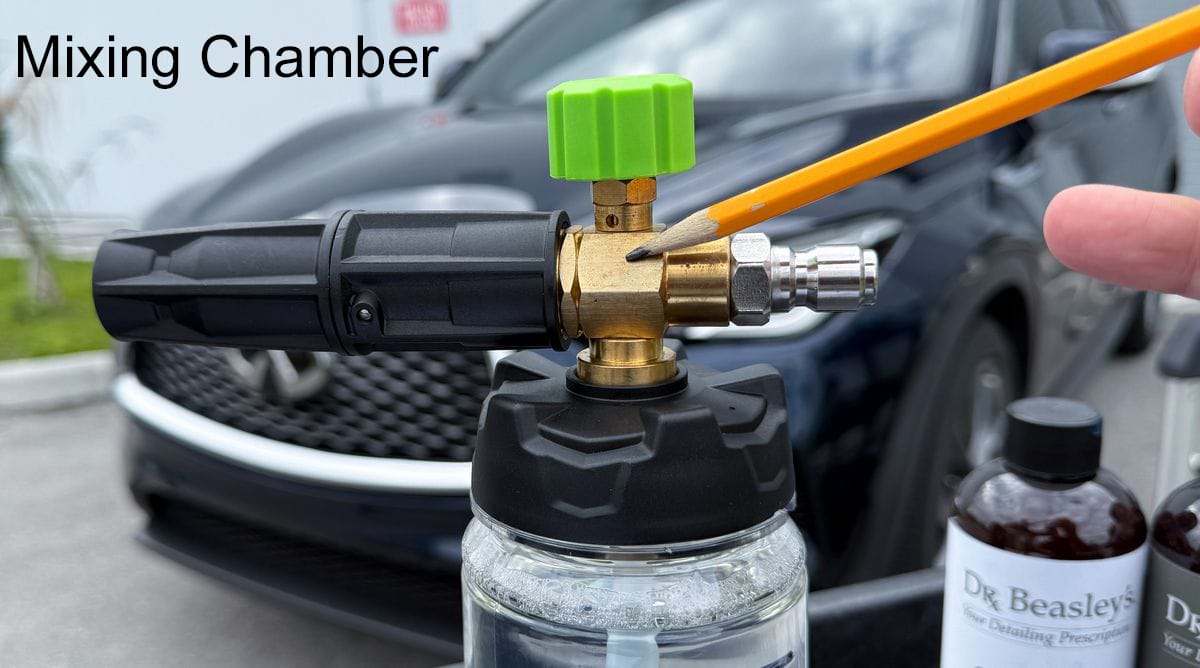
Not all cannons are created equal. A “pro” version will have a brass body for durability and an adjustable spray nozzle. The orifice size inside the cannon also matters; if you are using a lower-powered electric pressure washer, swapping to a 1.1mm orifice can significantly increase foam thickness.
3. Dedicated Snow Foam Soap
Standard dish soap or cheap car wash liquids won’t cut it. You need a dedicated “Snow Foam” solution designed with high lubricity and foaming agents that won’t strip your wax or ceramic coating.
Step-by-Step: Using Your Foam Cannon Like a Pro
Preparing the Mixture
One of the most common mistakes is using too much soap. Most concentrated snow foams require a 1:10 ratio. Fill your foam cannon bottle with warm water first, then add about 2 to 3 ounces of soap. Adding the water first prevents the bottle from overflowing with suds while you’re trying to fill it.
Dialing in the Settings
Most foam cannons have two knobs. The top knob controls the water-to-soap mixture. Turning it toward the “-” (minus) sign usually restricts water flow, resulting in thicker foam. The front nozzle adjusts the spray pattern. You want a wide “fan” spray rather than a direct stream to ensure even coverage.
The Application Process
Always apply foam to a dry vehicle in the shade. If the car is wet, the foam will slide off too quickly. Start from the bottom of the vehicle and work your way up. This ensures the soap dwells on the dirtiest parts of the car (the rocker panels and wheels) for the longest amount of time.
Pro Tip: The “Dwell” Time
Once the car is covered, let it sit for 3 to 5 minutes. You want to see the foam slowly “pull” the dirt down the body panels. However, never let the soap dry on the paint. If you are working in a warmer climate, rinse it off sooner.
Choosing the Right Foam Cannon for Your Setup
When you’re shopping for a foam cannon, you’ll encounter a wide range of prices. Here’s how to decide which one fits your needs:
- The Weekend Warrior: If you wash your car once every two weeks, a standard plastic-bodied cannon is fine. It gets the job done but may require more soap to produce thick suds.
- The Detailing Enthusiast: Look for a “premium” or “pro” model with a wide-mouth bottle (so it doesn’t tip over) and heavy-duty brass fittings. These models atomize the soap more efficiently, saving you money on chemicals in the long run.
- The Electric vs. Gas Choice: If you use an electric washer, ensure your foam cannon is optimized for lower GPM flow. Gas washers are more powerful, but they require a cannon that can handle higher pressure without leaking.
Common Mistakes to Avoid
Even with the best gear, a few simple errors can ruin the experience:
- Using Cold Water: Warm water helps dissolve the soap and creates a better chemical reaction for foaming.
- Skipping the Rinse: While the foam does the heavy lifting, you still need a thorough pressure rinse afterward to remove the loosened grit.
- Neglecting Maintenance: After every use, run clean water through your foam cannon for 30 seconds. This prevents soap residue from drying and clogging the internal stainless steel mesh filter.
- Poor Aim: Avoid spraying foam directly into air intakes or sensitive engine electronics if the hood isn’t fully sealed.
Advanced Technique: The Two-Step Method
For extremely dirty vehicles, pros use a “two-step” foaming process. First, apply a layer of foam and rinse it off to remove the heavy grit. Then, apply a second layer of foam and use that as your lubrication while you perform a gentle hand wash with a microfiber mitt. This provides the ultimate protection against scratches.
Frequently Asked Questions
Can I use a foam cannon with a regular garden hose?
Technically, no. A foam cannon requires the high pressure of a pressure washer to aerate the soap. For a garden hose, you would use a “foam gun,” which produces suds but not the thick, “snow” consistency of a cannon.
Does the foam actually clean the car?
Snow foam is a “pre-wash” treatment. It loosens and removes about 70-80% of surface dirt. For a perfectly clean car, you will still likely need a light contact wash, but the foam makes that process much safer for your paint.
Why is my foam cannon producing watery suds?
This is usually caused by one of three things: using too little soap, using a soap not designed for foaming, or a clogged internal filter. Check your soap-to-water ratio and ensure your pressure washer is providing adequate GPM.
Is snow foam safe for wax and ceramic coatings?
Most high-quality snow foams are pH-neutral, meaning they will not degrade your wax, sealant, or ceramic coating. Always check the label to ensure the product is “LSP (Last Step Product) Safe.”
Final Thoughts
Mastering the use of a foam cannon is the single best way to level up your home detailing game. It saves time, reduces the risk of scratching your investment, and quite frankly, it makes washing the car a lot more fun. By choosing the right equipment and following a consistent technique, you can achieve a “just-detailed” look every single weekend.