

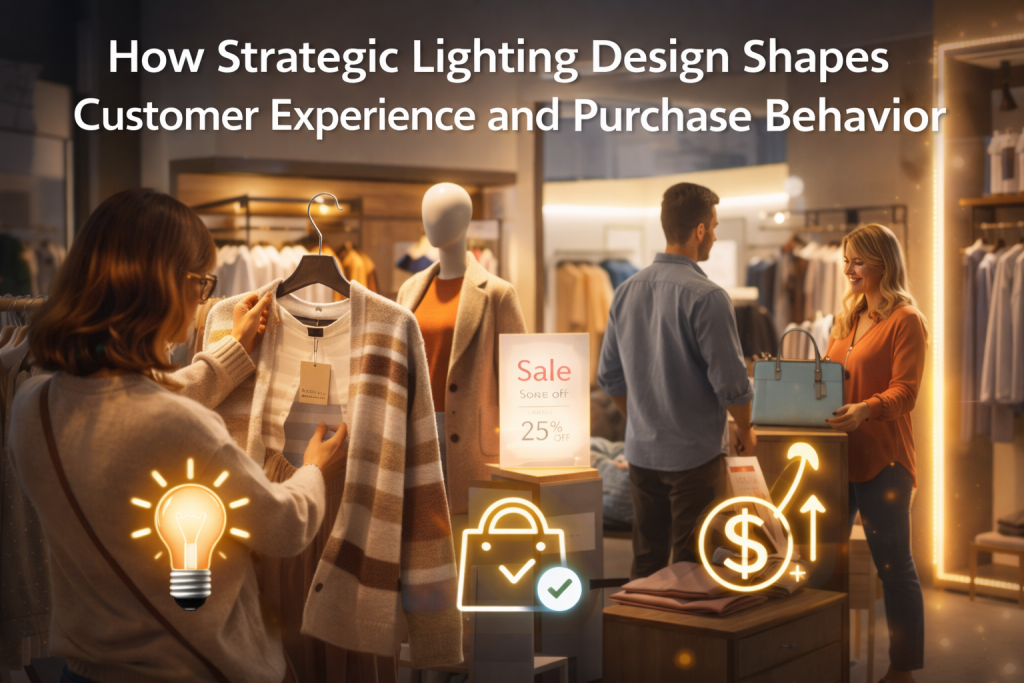
Have you ever walked into a boutique and felt immediately relaxed, or stepped into a discount store and felt a sudden rush of energy? That shift in mood isn’t accidental. While music and layout play a role, one of the most powerful, silent influencers in a retail environment is light.
Lighting does far more than just help customers see the merchandise. It sets a stage. It guides the eye, influences emotions, and ultimately, helps decide whether a browser turns into a buyer. For retailers, understanding the nuance of strategic lighting design is essential for creating spaces that don’t just display products, but actually sell them.
The Subtle Psychology of Illumination
Humans are naturally phototropic; we are drawn to light. In a retail setting, this biological instinct can be used to guide shoppers through a store. Brighter areas naturally attract attention, while dimmer areas can create intimacy or pause.
But the psychological impact goes deeper than just navigation. Studies in environmental psychology suggest that lighting significantly alters our perception of a brand’s value. Soft, warm lighting is often associated with luxury and high quality—think of a high-end jewelry store or a cozy bookstore. Conversely, bright, cool lighting suggests efficiency and affordability, which is why you see it big-box retailers and pharmacies.
When lighting is executed poorly, it creates visual noise. Glare, flickering bulbs, or unflattering shadows in fitting rooms can subconsciously agitate a customer, causing them to leave the store empty-handed without quite knowing why. When executed well, it creates an emotional connection that encourages customers to linger longer.
The Pillars of Strategic Lighting
Creating the right atmosphere requires balancing several technical elements. It isn’t enough to simply install bright fixtures overhead. Effective commercial lighting relies on a mix of color, intensity, and direction.
Color Temperature
Measured in Kelvins (K), color temperature ranges from warm to cool.
- Warm Light (2700K – 3000K): Creates a cozy, inviting atmosphere. This is ideal for clothing boutiques, restaurants, and spaces where you want customers to feel comfortable and relaxed.
- Cool Light (4000K – 5000K): Mimics daylight and feels more energetic. This works best for grocery stores, pharmacies, or tech shops where clarity and alertness are key.
Intensity and Brightness
Brightness helps establish hierarchy. If everything in the store is lit with the same intensity, nothing stands out. This is known as the “flat” look. Strategic design uses contrast to create visual interest. Display tables should be significantly brighter than the aisles to draw the eye toward the product.
Direction and Beam Spread
Where is the light pointing? Downlighting provides general illumination, but accent lighting highlights specific items. Narrow beams can make a single product look like a museum piece, instantly increasing its perceived value.
Turning Shoppers into Buyers: Practical Tips
You don’t need a complete renovation to improve your store’s lighting. Small adjustments can yield significant returns in customer engagement.
Layer Your Lighting
Avoid relying on a single light source. The best retail spaces use a combination of:
- Ambient Lighting: The base layer that allows customers to navigate safely.
- Accent Lighting: Spotlights that draw attention to key displays or new arrivals.
- Decorative Lighting: Chandeliers or sconces that reinforce the brand’s aesthetic.
Don’t Neglect the Fitting Room
This is the most critical point in the purchase journey. If a customer looks in the mirror and sees harsh overhead shadows casting dark circles under their eyes, they aren’t buying the shirt. Invest in vertical, frontal lighting in fitting rooms to flatter the customer.
Guide the Journey
Use brighter pools of light to create a visual path through the store. If you want customers to walk to the back of the shop, ensure the rear wall is well-lit and visually compelling.
Lighting the Way to Sales
Strategic lighting design is a silent salesperson. It works tirelessly to highlight your best products, flatter your customers, and define your brand’s personality. By moving beyond basic utility and embracing the psychological power of commercial lighting, retailers can transform their physical spaces into immersive experiences. When customers feel good in a space, they stay longer, engage more deeply, and are far more likely to return.
