

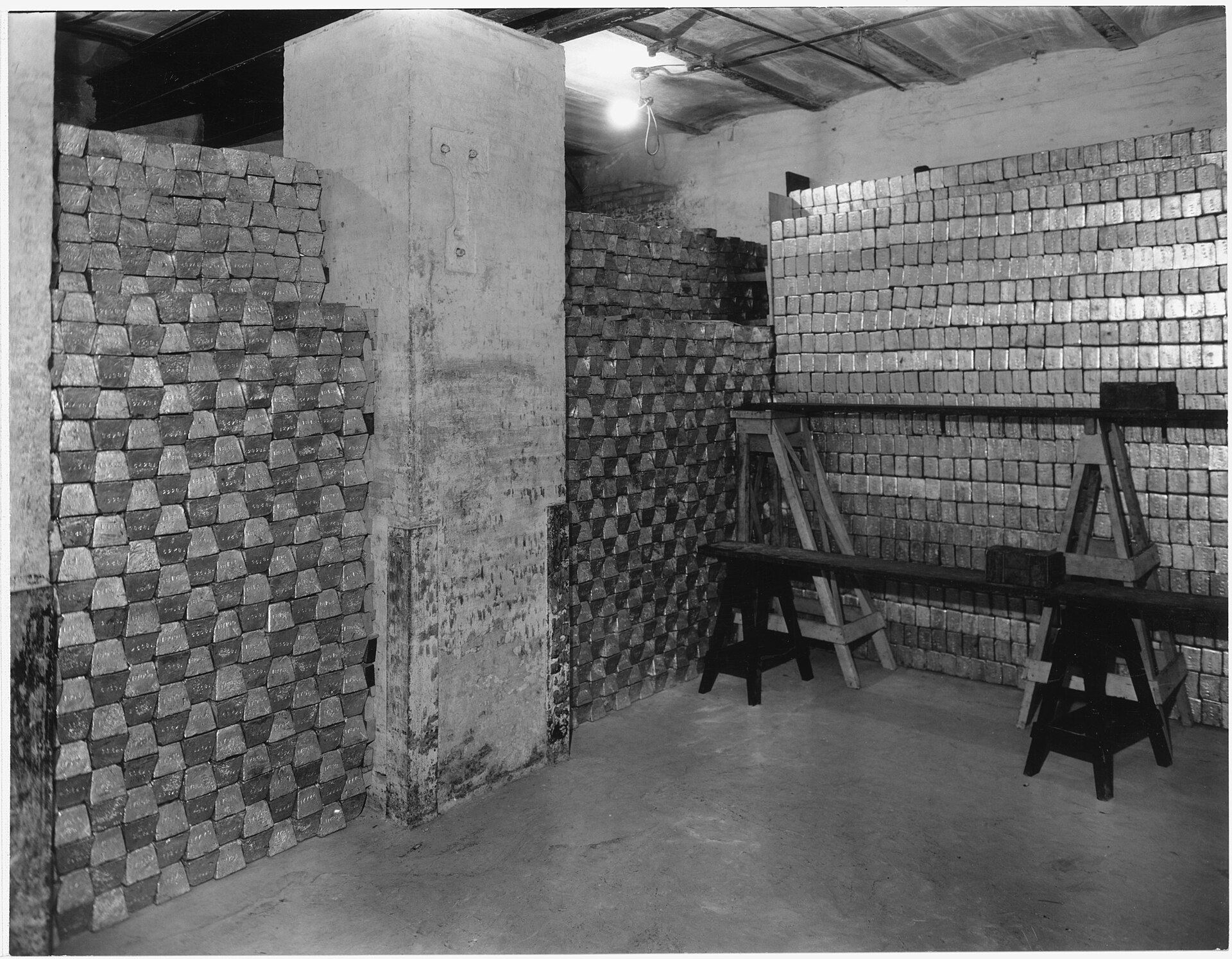
The most important buyers in the gold market do not give interviews, publish targets, or care about quarterly performance. They are central banks, and they have been purchasing gold at a pace — over a thousand tonnes a year in recent years — not seen since the era when currencies were still anchored to the metal itself. The World Gold Council calls it a structural shift. Set against history, that phrasing may be understated.
Reserve managers rarely explain themselves, but their surveys do. The motives they cite cluster around three: diversification away from concentrated dollar holdings; insurance against sanctions and the freezing of reserves, a risk that moved from theoretical to demonstrated in 2022; and distrust of where the great powers’ debts are heading. Gold kept in domestic vaults answers all three at once — an asset with no issuer, no default risk and no politics of its own, as our markets desk has detailed.
Who Is Buying, and Who Is Not
The buying map is a geopolitical map. Singapore, Poland, India, China, Turkey and a string of emerging-market central banks have led the purchases — institutions building what several describe, in the careful language of their profession, as resilience. Western central banks, holding most of the world’s gold already from an earlier age, have mostly stood pat, neither buying nor selling. The asymmetry tells its own story about who feels exposed to the current order and who built it.
Price effects follow the flow. Official buying is famously price-insensitive — these are decade-long reserve decisions, not trades — which has given the gold market a bid that absorbs corrections. Analysts who once modelled gold purely from interest rates now model it from geopolitics, a variable with no yield curve.
What It Signals About the Dollar
Reserve managers are quick to insist that none of this dethrones the dollar: it remains the world’s trade currency, its deepest market, its default. The data agrees — the dollar’s share of reserves declines by inches, not leaps. But the direction of the inching is unanimous, and gold is where the inches are going. Each tonne moved is a small vote about the next fifty years rather than the next five.
The View From the Vault States
For the countries doing the buying, gold accumulation is only half defensive. It is also a form of monetary statecraft: building the reserve mass that underwrites currencies, anchors regional payment arrangements, and supports the long-discussed ambitions of blocs that would prefer trade settled in something other than dollars. Gold is the one reserve asset every faction can agree to hold — neutral because it belongs to no one — which is precisely why it accumulates wherever trust in the existing arrangements is being hedged.
The mining industry trails the strategy at a distance. New supply responds to price over years, not quarters, and the great discoveries grow rarer — a supply inelasticity that turns official demand into a price escalator with no obvious ceiling mechanism. Somewhere in that arithmetic sits the explanation for a rally that keeps embarrassing the forecasters who model it as a trade. It is not a trade. It is a migration.
What would end the buying spree is equally instructive: not a cheaper price, analysts say, but a more trustworthy alternative. Until reserve managers see a deep, liquid asset that sits outside any one country’s political reach, the quiet accumulation beneath the market is likely to continue setting a floor under prices.
Investors watching the official sector have learned to read the purchases as a slow-motion referendum on the monetary order. The metal that the twentieth century retired has been rehired by the twenty-first — not as money, but as the asset you hold when you are not entirely sure about money. More at marketmedianews.com.
